August 27, 2026
✅ Your work should not require fresh thinking every single time.
✅ One system helped me reduce a 4-week process to just 4 days.
✅ Use my KADE framework to Keep, Automate, Delegate, or Eliminate recurring work.
✅ Better systems = less brain-drain, and more time for what actually matters.
Hi {{first_name}},
This ONE strategy has given me hours of my life back.
I applied it in my business this year, and a process that used to take me four weeks now takes just 4 days 🤯
Now, before you think that I’m about to pitch you some shiny new AI hack or complex 372-step productivity system… Nope.
This is the simplest efficiency strategy you can implement starting today.
And when you do? It’s going to save you HOURS of time, effort, and brain-drain.
*drum roll please*
🥁🥁🥁🥁🥁
Build a simple, repeatable system.
That’s it.
The better you can automate, systematise, and document the repeatable processes you run in your work, life, and business – the faster you get things done, and the easier they become.
Because every time you do this, you remove another decision your brain has to make next time.
Less remembering.
Less figuring-it-out-again.
Less: “Wait… how did I do this last time?”
Oh, AND… the more time you get back in your life for the things you actually want to be doing, that you keep postponing for “later”.
The yoga class.
The quiet night in.
The side-project you’ve been dreaming of.
The time with your family where you are actually there rather than mentally rehearsing tomorrow’s to-do list.
The more you systematise what repeats, the more freedom you create for what matters.
From 4 Weeks to 4 Days
Let’s jump into our DeLorean for a moment and travel back to July 2025.
This was the very first time I decided to go all-in on an offer in my business: the OG “Stress Reset”.
And when it came to online business? I had absolutely no idea what I was doing. 😂
Thank goodness I had a coach and mentor beside me who could guide me through it step by step.
But even as I stumbled my way through that first launch, I noticed something.
There were so many pieces that could eventually be:
-
streamlined
-
simplified
-
automated
-
delegated
-
templated
I documented it all. Every single step, every single process. Recorded myself doing repetitive tasks. Created fill-in-the-blank templates.
And started creating a structure I could return to rather than rebuilding the entire process from scratch next time.
Now, I’m not going to sugar-coat this: creating the system initially took longer.
When you’re brand-new at something, there’s already a steep learning curve.
You don’t know what you don’t know.
So trying to simultaneously create the world’s most elegant SOP while learning the thing for the first time?
Probably not your highest-ROI activity (lesson learned the hard way 😅).
But the second time?
Now we’re talking.
Fast-forward to March 2026 and the Founding Members launch of Efficiency Made Easy.
I returned to those SOPs.
Refined them.
Removed unnecessary steps.
Made the templates cleaner.
By June, the structure was strong enough that I could take on one of my most ambitious projects yet:
14 live masterclasses in 18 days.
As one of my clients, Gillian, puts it: “I elevated my system to handle the ambitious goals I set out for myself. It upgraded from domestic strength to industrial strength.”
And then came The Time Back Hub.
By that point, the launch process that had originally taken me around four weeks took approximately four days.
4. days. (!!!!!!!!!!!!!!)
Instead of scrambling around during cart-open week with 700 mental tabs flashing red…
I could focus on serving, creating, connecting, and actually enjoying the experience.
THAT is the invisible power of systems.
And This Isn’t Just for Business Owners
I use this exact mindset in my corporate job, too.
It’s one of the reasons I can work part-time in a role with a workload that could easily fill full-time hours and continue building my business alongside it.
Without boring you with the detail, my corporate work includes annual FMCG review cycles… essentially analysing and making recommendations about which products ultimately make it onto supermarket shelves.
The specifics change.
The underlying process does not.
So rather than mentally rebuilding that process every year, I asked:
What repeats?
What can be templated?
What can be automated?
What requires my actual judgement?
That thinking has helped me compress work that would ordinarily span 3 months into 2 weeks when an unexpected customer request landed in my inbox.
Not because I’m moving at superhuman speed.
Not because I’m frantically multitasking.
Because I’m not starting from zero.
Every repeatable task without a system forces you to pay the thinking-tax all over again.
And that tax adds up.
The 5-Step Process I Use
Now, before you think:
“Okay Vik, lovely for you, but I’m just not naturally organised like that…”
Good news.
Neither systems nor efficiency are personality traits. They are skills.
LEARNABLE skills.
And one of my favourite examples is my VIP client Gillian (who was on the pod recently, listen here).
Through our work together, she has developed her own ability to plan and systematise in a way that works with her brain, circumstances, and priorities as a busy mum balancing corporate work and a business.
That’s the goal.
Not becoming dependent on my system.
Learning to see the opportunities yourself.
So here’s my process in a nutshell:
Step #1: Identify the repeatable activity
(The one that makes you *sigh* when it comes around again…)
Step #2: Run it through my KADE filter, where:
-
K: Keep = it’s working, and genuinely deserves your attention
-
A: Automate = it’s repeatable, rule-based, tech/AI-friendly
-
D: Delegate = can be done by someone else with guidance + instructions
-
E: Eliminate = it no longer needs to happen at all
And yes…
Sometimes the most efficient process is simply not doing the thing anymore.
Step #3: Map the current process step-by-step
(I recommend you do this in real-time so you don’t skip any detail… and yes, there are really cool ways you can use AI to help here)
Step #4: Simplify
Identify inefficiencies, opportunities for simplification, and “template-ification” (i.e. creating something that’s repeatable and plug-and-play)
Step #5: Implement the system.
Chunk it into bite-sized pieces with a realistic timeline.
That is how a system becomes sustainable rather than becoming another giant project sitting unfinished on your to-do list.
The 5-Step Process I Use
This is one of the many skills we build inside my 8-week group coaching program, Efficiency Made Easy: my planning system designed to help you 10X your results, reclaim your energy, and get your precious time back.
Because efficiency isn’t really about finishing emails faster.
It’s about what becomes possible with the time you recover.
-
Picking your daughter up early.
-
Getting to yoga.
-
Building the thing you have been quietly dreaming about.
-
Closing your laptop and hearing the front door open without immediately thinking about the work you “should” still be doing.
That’s the point.
Right now, the only way into the next round of Efficiency Made Easy is through the Priority List.
And one final tip before you go:
Make sure you start with something you already know well.
If it’s your very first time doing something, you probably cannot yet see where the friction lives (yet).
Instead, look for the annoying, repetitive task you’ve completed five, ten, twenty times before.
The one that makes you think:
“Surely I don’t have to keep doing it like this…”
Start there.
You may be surprised how much time is hiding in plain sight.
💌 And if you have a particular productivity, planning, or organisation problem you’d love me to unpack, hit “reply” and tell me.
Real-life problems make the best newsletters, and I’d genuinely love to help.
This stuff is my bread & butter, and makes me soooo happy to nerd out on. When it’s beneficial to you? Win-win. 🏆
To your inevitable success,
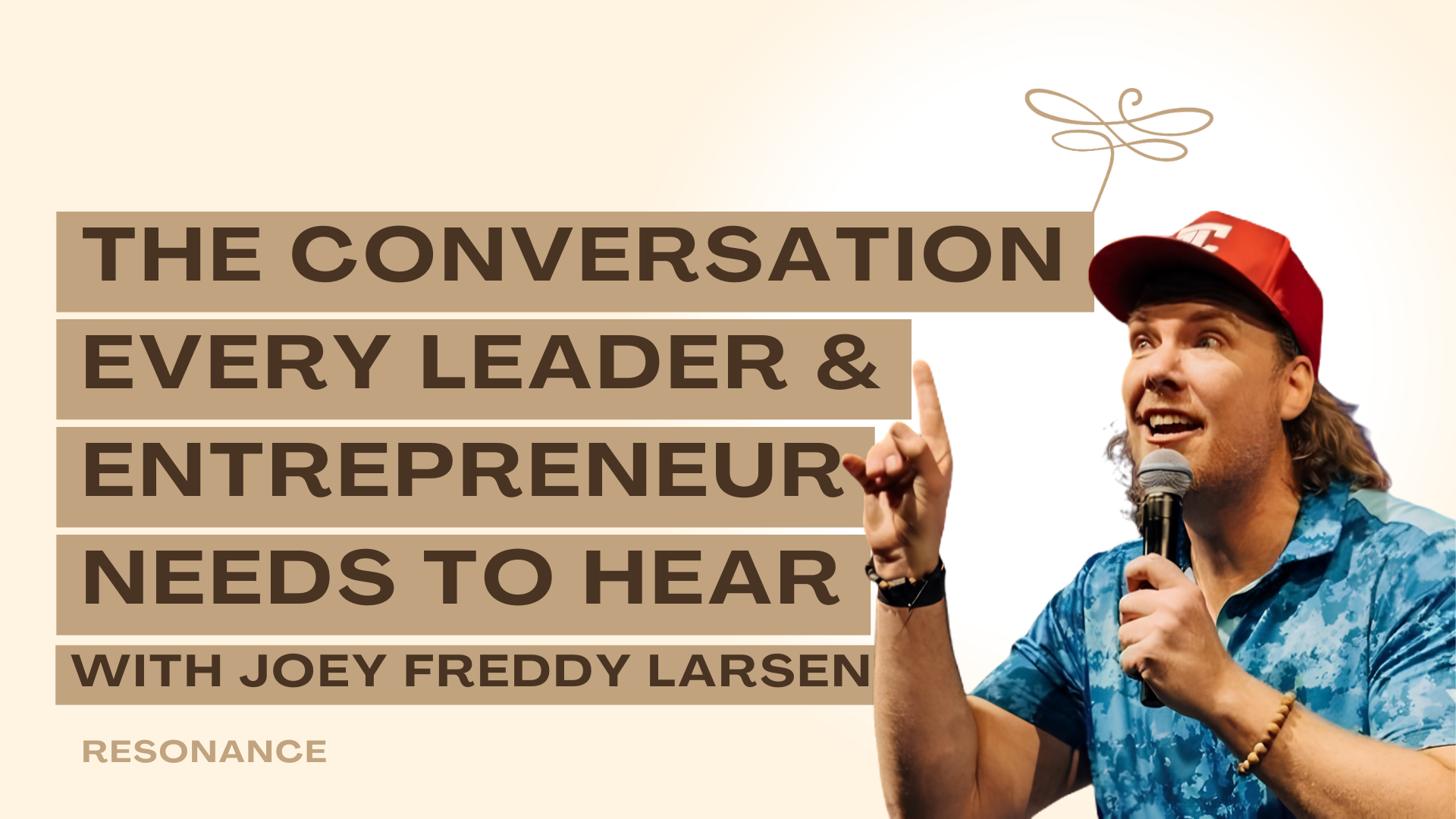
P.S. What if your greatest competitive advantage isn’t simply what you know… but how people feel in your presence?
In this week’s episode of Resonance, I connect with Joey Freddy Larsen. Drawing on more than 17 years across live performance, stand-up comedy, acting, sales, and coaching, Joey explores why authentic human presence may become increasingly valuable in an AI-enabled world.
Together, we unpack why magnetism isn’t necessarily something you learn to perform. Sometimes it emerges when you stop performing altogether… removing the masks, expectations, and learned behaviours that keep you from fully being yourself.