Resonance – Episode 47
Verbatim Transcript
Speaker: Viktoria Levenberg
So let me ask you, what do you think your most valuable resources are? I want you to take this
seriously. The results of hustle culture are not sustainable. You gotta work hard to be successful.
That is a lie. Oh my God, it drives me bonkers.
How many times have you caught yourself saying, “I’m so tired,” just this last week? In today’s
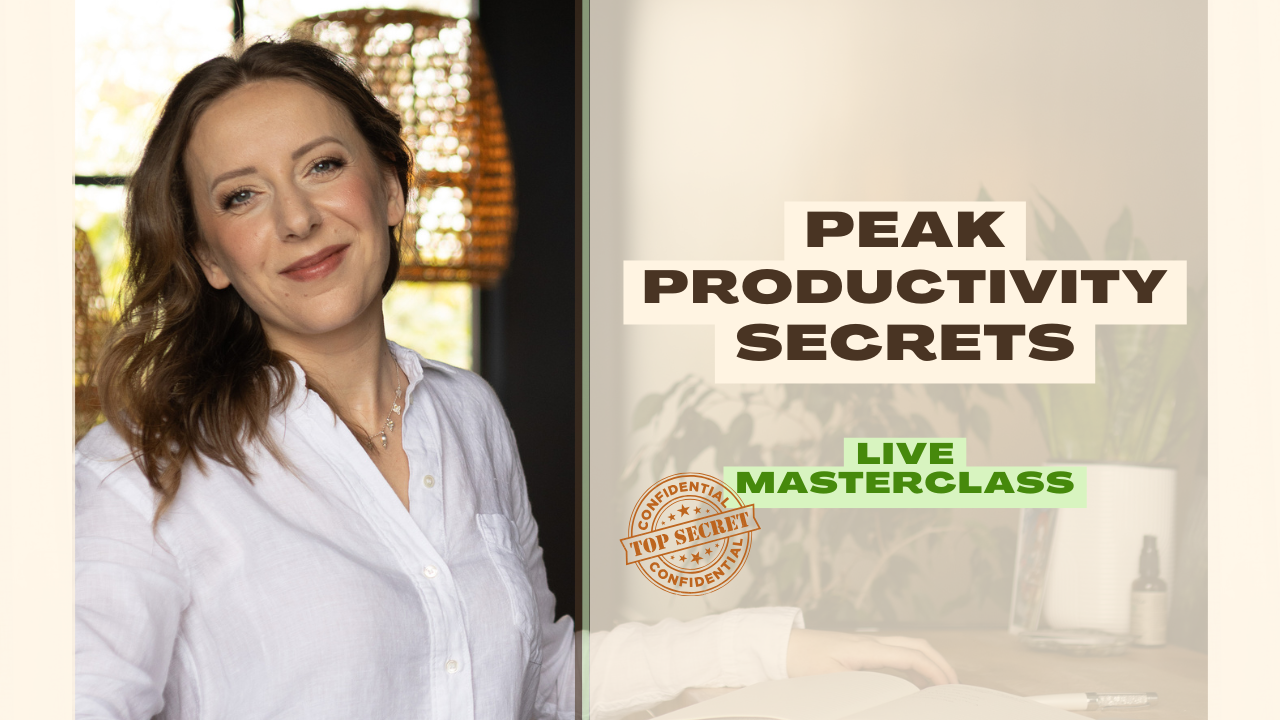
episode, you are going to learn about the three simple ingredients that your to-do list is missing
and how to quickly incorporate them so that you can instantly boost your energy and your
productivity. Let’s dive in.
Welcome to Resonance, the podcast for high performers and entrepreneurs who want to do life,
work, and success differently. I am your host, Viktoria Levenberg, and I’m obsessed with
efficiency, productivity, and planning in a way that harnesses your energy and your natural
rhythms while keeping you in alignment and integrity. Because I have figured out that lasting
success is not about the hustle. It is about being in resonance. Let’s begin.
All right. This week is honestly… tired has been the theme of this week. So at the time of the
recording of this episode, we’ve just come through a full moon. It was the Pink Moon, which
means it’s the first full moon after the spring equinox in the Northern Hemisphere. For me, it’s
the autumn equinox, so the days are getting shorter. It’s getting a little bit colder. You know, it’s
getting darker. And it’s also coupled with the energy of Easter week, etcetera. So hands down,
tired has been the theme of this week, which is what inspired this episode as well.
Because if you’re anything like me, chances are your energy is quite precious. And unfortunately,
most people let this slip when they plan their work, their life, and their business. So let me ask
you: what do you think your most valuable resources are?
And don’t say money. I know money is energy. It is also a resource. However, your most valuable
resources, contrary to popular belief, are in fact your time and your energy. They’re truly those
assets that we get to nurture, yet they are so often also the ones that we tend to hand away
freely, like cotton candy at a carnival.
And I will always, always, always stand for the fact that your energy is the absolute most precious,
most valuable currency of your life. In fact, I wrote a whole newsletter about it just during the
week of recording this episode. By the way, if you’re not subscribed to my newsletter, make sure
you do because they are so amazing. Um, not that I’m tooting my horn or anything, but they’re
pretty great. And, you know, there’s only so much I get to share with you on the podcast versus in
writing, so it’s quite a different experience.
If you’re someone that is overloaded with emails and you actually just want like a breath of fresh
air in your inbox, then Flourish Weekly, which is the name of my newsletter, is definitely the place
to be. I’ve got the link in the show notes just below. Um, but anyways, let me kind of not get too
sidetracked and come back to the theme of today’s episode, which is energy.
You see, these are our most precious assets, our most valuable currency, and yet we’re often
running out of them, right? Like we’re running out of time, and we’re energy leaking or we’re
sacrificing the things that would actually fill up our energy cup in order to scream for said time
that we’re running out of.
Now I fear not, my friends, because by the end of this specific episode you will have the three
powerful shifts to boost your energy that are an absolute must-have on your to-do list so that
you can perform at your peak while feeling pretty amazing. Let’s begin.
Okay, we’re going to begin this episode by debunking a belief I see too commonly and too often
in the people I work with, and it is this nasty, nasty belief that we’ve been taught from a really
young age and we get reinforced in the corporate workforce and everywhere else, which is: you
gotta work hard to be successful.
That is a lie.
Now if I’m starting to rub you the wrong way, that’s… notice it. Notice any resistance that’s
coming up, and I just ask you: be open-minded. Stick around. See what’s waiting for you on the
other side of debunking this lie and this belief.
Because the thing is, this belief of “you’ve got to work hard to be successful” has been
established to allow for hustle culture to work. Now there is a reason why it is so common. Just
because it’s common doesn’t mean it’s normal. And I will be the first one to put my hand up and
say that I believe hustle culture is absolutely broken.
It operates backwards. It goes against everything that human beings, our planet, and the ability
for everyone to thrive is actually meant to be. It depletes your energy, and it is a really slippery
slope and path that goes straight to burnoutville. Again, speaking from experience here, my
friends.
And I find it really heartbreaking, unfortunately, that even in the common workforce, you know, a
department that you would be like, “Oh, they’re supposed to look out for me,” um… literally
stands for human resources. Think about that for a second. Human resources. You are a resource
that the business uses to operate. And so of course they want to get the most resources from
you absolutely possible.
Um, it’s honestly, the deeper you get into it, the scarier it gets. Um, but really, all… keeping it kind
of to the context of this specific conversation, that the results of hustle culture are not
sustainable. Yes, they might work to some extent, and depending on your personality type and,
and you know, your achievement archetype, all those things, they might get you to a certain
specific point.
However, if your energy is depleted, your work is likely pretty low quality, or you’re making
mistakes and you’re having to redo it 20 million times, or double-check and proofread everything
because you’re just not thinking straight.
And the most dangerous one, and this one’s so, so sneaky, and that is busy work masking itself as
productivity. So you know, being like, “Oh my God, I’ve got so much to do, I’m so busy,” and
you’re like rearranging boxes on a PowerPoint slide. Like… is that really your five percent activities
that are going to move the needle forward on all of your biggest dreams? I don’t think so.
Um, so this is why we are here today. We’re debunking this lie that we have been fed for way too
long that you gotta work hard to be successful. Because there is an easy way. And in fact, speak
to the most successful people in the world and they will tell you that grinding and hustling and
burning yourself out ain’t the way to go.
So with that in mind, I would love to introduce you to the missing ingredient in your work life and
planning, and it is one of my key pillars that I teach, which is energy management.
And I will bet you that these things that I’m about to share with you, which are just starting to
scratch the surface… they’re pretty basic, but we’ve got to start somewhere, right? I will bet you
that they are not on your to-do list right now and that they are often the very first to go when
you are scrimping for time.
But before I reveal them, let me just give you a little metaphor, a bit of a visual to work with.
So imagine that you have a jug or a pitcher or, you know, like a big vessel of water. And if you’ve
been around my neck of the woods for a while, you might have seen me speak about this before,
but I just find it is really such a powerful metaphor.
So you’ve got this big jug of water, and imagine that this jug represents you and the water is your
energy, right? They’re the resources, the life force energy that emanates from you that you then
choose to invest or spend in certain areas of your life.
So there will be different areas of your life that will demand your energy, aka your resources, such
as maybe work being a big one for most of us, right? Um, those of us with kids, family, you know,
pets, um, friends, admin, chores, doing the groceries… all the different things, like they stack up.
And so here you are. Imagine it’s like all of these demands are little glasses. And so you’re
pouring from your little energy cup and you’re pouring water into the work glass, and then you’re
pouring water into the life admin glass, and then you’re pouring some into the family, and then
maybe there’s a friends one.
And what happens is one of two things.
As you’re pouring from your energy jug, the water starts to deplete, right? And what I see more
often than not is people pouring from the reserves, which is that last little bit that’s left, until
they’re trying to pour from empty. And that’s when the inevitable collapse comes in.
Or the better way, the sustainable way, is people who have found a really effective, time-efficient
way to resource their energy cup and make sure that they are also reallocating resources and
energy back into their own jug.
So in a perfect scenario, which this is possible and this is how you achieve peak productivity,
you’re actually pouring from the overflow. So you’ve got so much energy in your vessel that the
energy that you are pouring into your work, into your life, into your business Your family, your
kids… it is overflowing. You’ve got so much left, and you’re just giving because there’s so much to
give. Overflow. That is energy management, my friends.
So how does this work?
Look, we are all bio-individual beings, right? So again, if you’ve been around my neck of the
woods for quite some time, you will know that I don’t believe that there is a one-size-fits-all
approach. You know, someone’s resourcing of their cup might be very different to someone
else’s, and it depends on your personality types and a whole, whole plethora of different things,
which is what I am uncovering with my students in Efficiency Made Easy right now.
However, the three basics that we all need more of, and we all better ought start here, because I
can bet you that there is at least one of these, if not all three of them, that you currently have an
energy deficit in, is what we’re going to dive into right about now.
Number one: sleep.
Now before you roll your eyes at me, let me ask you, and be honest with me. How many hours of
sleep have you been getting this last week? Has it been enough, so much so that you are waking
up naturally with your body clock and rhythm and feeling energised at the start of the day? Or
are you like pressing snooze for the third time and feeling that heavy, groggy, you know, kind of
almost this brain fog situation going on and just like you can’t fully open your eyes in the
morning?
Yeah.
We live in a world that has got a major sleep deficit. It breaks my heart, in all honesty. It is one of
the biggest challenges that we face in our modern-day and age. And when I say sleep, I don’t just
mean the quantity, aka the hours of sleep. I’m also speaking about the quality of your sleep
because, again, our lifestyles… you know, um, don’t even get me started on the blue light that
we’re all exposed to and the way that we choose to live our lives and eat and move and all those
different things. They actually, unfortunately, deteriorate the quality of our sleep quite
significantly as well.
So, if you are one of those people who are really struggling either with quality or quantity of
sleep or both, I actually have dedicated specific episodes to this subject in itself that I’ll link up
just underneath this video because I highly recommend them to you and I think you’ll love them.
One of them is “How to Sleep Like a Pro” without needing to actually increase the hours, so it
makes sure that you get the best bang for your buck of the hours that you do get when you’re in
bed. And the second one actually goes a layer deeper because sleep is only one of the seven
types of rest that every high performer needs.
And so it might be that you’re feeling really tired and you’re like, well, I guess I’m getting enough
sleep and it’s pretty good, but why am I still so tired? That episode will answer all of your
questions. So again, that’ll all be linked up in the show notes.
But really, I want you to take this seriously because even the Harvard Business Review states that
most of us have a sleep deficit, and when we have that it negatively impacts our performance.
And studies show that people are losing sleep from working too much. That’s then having a
knock-on effect to their sleep quality.
Like, I’m not just using this anecdotally. This is a fact. It is an epidemic. And I genuinely, genuinely
want you to focus here first and foremost because you cannot operate at your best from a
depleted state, and sleep is the easiest, fastest solution to it all.
So that is number one: sleep.
Number two: move your body.
I know, I know. It might feel like I’m here being like this boring teacher telling you to eat your
veggies and drink your water. But like, this is so important and again probably one of those things
that we’re like rolling our eyes at yet not doing. Like we all know we should be doing it, but we
actually don’t do it, right?
And so this I’ve seen mostly with really busy corporate professionals and entrepreneurs as well,
especially when, um, you know, they don’t have a lot of structure or plans in their day that hold
them accountable to moving and either getting outside or to a class or however they choose to
move their body.
And they’re often relying on trying to find the time or trying to find motivation, and none of
those things work.
The fact of the matter is we live in a primal body. Literally, our body needs to move. When we are
stressed, we need to process that stress. We need to get those endorphins up and running, and it
is a way of filling up your cup.
Now there is a plethora of different types of movement that you need depending on your
constitution, you know, the other again bio-individual specifics of your life, right? Like if you are
already running on empty and super burnt out, then maybe waking up at 4:00 a.m. for F45 isn’t
the best solution.
Um, but again, you know, I could nerd out on this for days. In fact, I have also recorded a specific
episode on movement that I will also link up to this episode in case that is what you’re in need of
in your life right now.
And remember that as long as it is regular, it works for you, and it brings you joy, those are the
essentials that will truly fill up your energy bucket.
So that is number two: move your body.
And lastly, we’ve got number three.
Oh dear, and this one I’m really damn passionate about. And I’m keeping this super high level
because there’s another deeper layer we could go into. But again, I wanted to keep this pretty
basic and pretty attainable for anyone listening to this episode.
And that is: take a freaking lunch break.
Like, oh my God. It drives me bonkers to see people eating at their desk, skipping lunch. And I’m
not saying, like, you know, if you’re intermittent fasting or you’re not eating, whatever. I’m not
saying you need to eat at midday. That is not what I’m saying at all. I’m just saying take a break in
the middle of your day, and ideally at multiple points throughout your day.
But again, we’re not going to go too far down that rabbit hole. At least start with one.
And I will never forget the moment I was at a burnout panel with about 100 women or so, and
one of the panellists asked the crowd. It was like, okay, um, hey, you know, raise your hand if you
take a lunch break.
And of course I was, you know, the A-plus student, one of the first ones to put my hand up. And
then I looked around me and I was like in disbelief. I think my jaw dropped in the moment. I was
like, how am I one of maybe ten women who put their hand up?
Ten percent of people who take a lunch break. Like that is ridiculous.
And I remember, you know, that was a really humbling moment of going back in time of the days
when I used to use my lunch break as an opportunity to catch up on emails or, um, you know, eat
it at my desk or completely skip it or all these different things.
And again, without going too far down this rabbit hole, there is a thing called an ultradian
rhythm, which is your body’s circadian rhythm equivalent throughout the day. In fact, 24 hours of
the day. Um, but it literally… your body works in specific cycles.
And in order for you to maximise the peaks, it needs you to honor the specific breaks throughout
the day. Otherwise it’s just like a path downhill.
Which is why most people who don’t take breaks during their day, by the time they’re done with
their work, their brain is fried. They’ve got zero left in the tank, and all they do is just numb out
on the couch because they’ve got nothing left to give.
And I find that a real shame, um, because it’s actually so simple and so easy to implement once
you’ve got the planning formula that helps you incorporate energy management and resource
allocation straight from the get-go.
But if there’s one thing that you just do today, even right this second, pause this episode right
now, head into your calendar and put a recurring 30-minute time block at lunchtime in your
diary.
It doesn’t have to be 30 minutes if that sounds really scary. If it sounds too much, just put
something, some kind of reminder, and do your best to follow through. And if you don’t follow
through, that’s okay. Just try again the next day.
But these little prompts, they will act as visual cues. That is literally how I started. Like I just put a
recurring invite in my calendar at midday and also at the time that I wanted to make sure I left
the office because I used to be one of those late-night owls.
And you’d be surprised at how those little prompts and cues tend to work quite a bit of magic.
So there you have it. Number three: take a lunch break or some kind of break throughout your
work day.
And this is working smartly, my friends, because smart work is the fastest way to success.
Because the success does not come from you working hard and burning yourself out and hustling
harder and grinding and being the first one in and the last one out.
No. Like, trust me.
I've been there. It doesn't work. Success comes from clarity. It comes from focus. It comes from
energy, creativity, flow state. And all of these things are boosted when you are giving from the
overflow rather than the reserves.
You don't need to grind harder. You don't need to push more. You don't need to chase at your
sacrifice. Hmm.
You don't need to chase at the sacrifice of your well-being, because one day there will be nothing
left to give. And take it from someone who got to that point. It's not worth it. So if there's only
one thing you take away from this episode, let it be this.
Weave energy management into your planning. Just start with these three simple things: sleep,
move your body, and take a break during the day. That is already going to be like the little tiny
adjustment you make that's going to have exponential impacts on your energy and your results.
And if you are interested, if you're like, okay cool, I get it, there's so much more where that came
from. Because I am teaching a really, really deliberate and detailed resource planning allocation
formula inside of my group coaching program, Efficiency Made Easy. It is so exciting. It is truly the
system that sets you up for success.
And if you're one of those people who's thinking, Vik, Vik, Vik, Vik, Vik, Vik, no you don't
understand, Vik. I have too much to do. There is no way that I could take a break or get more
sleep, let alone make time for moving my body. Who do you think I am? That is a privilege. I don't
have that privilege.
I'm not—this isn't me attacking you again. I'm just saying you might be thinking those things. And
you know what? You are thinking them because that's true. You do have too much to do. And the
harsh truth is that you have too much to do because you are so depleted that you can't even see
clearly at what is truly necessary and a priority to be done in the moment.
There is an ability to prioritise and allocate your energy, time, and productivity in a specific way.
And unfortunately, when we're depleted, we can't see that because our nervous system is fried
and, you know, we're not at our optimal capacity. Our mental clarity is out the window. So of
course I totally get it. Like I'm not pointing fingers here or anything.
But just notice if that's still the resistance that's coming up for you. You know that the fact that
your energy is depleted is actually one of the main reasons why you're feeling this way.
And so if you still think that you've got too much to do and that's why you can't give yourself that
extra sleep, moving your body, or taking a break, then just take a moment and look back at how
far this has actually gotten you. And in fact, is that potentially your mind trying to trick you and
masking you with productive—seemingly productive—busy work that's not actually productive,
that is actually keeping you away from the exact thing that you need?
If that is something that's happening, hey, you've got your three solutions: increase the sleep,
move your body, put a lunch break in your diary. Those are the three simple shifts that will
instantly boost your energy and have you performing at better productivity levels than you have
in a long time.
Because when we give from the overflow, we get to operate at our best.
So put it in the calendar. Block out some time for it. Make a commitment. Be coachable. Give it a
try. What's the worst thing that's gonna happen? You're gonna feel great. Come on. Give it a try.
Let me know how it goes.
I am so grateful that you are here. I will see you next week. Bye for now.
If you're a high performer or entrepreneur who's got big dreams and you've developed strategies
to get you closer to those dreams, but you feel like there are also parts of you self-sabotaging
your success, I built something just for you.
It is my signature Achievement Archetypes Quiz that is absolutely free, takes less than two
minutes, and it will give you instant feedback as to where your Achilles heel is. That is your
natural self-sabotaging behaviour when it comes to productivity, planning, efficiency, and
organisation.
And it gives you your next right step and the solution you didn't know you needed. You'll find the
link in the show notes just below. Make sure you find your achievement archetype and let me
know what it is.
As a fellow achiever, I will be the first to put my hand up that I have now mastered my Achilles
heel, and I can't wait for you to do the same.
The views and opinions expressed by guests on Resonance are their own and do not necessarily
reflect the views of me, Viktoria Levenberg, Living Health, or anyone working within the Living
Health brand. This space welcomes a diversity of ideas, experiences, and stories, and part of
Resonance is learning to take what aligns and gently leaving the rest.
Also, while I am a National Board Certified Health and Wellness Coach and deeply passionate
about well-being, this podcast is intended for educational and inspirational purposes only.
Resonance does not substitute personalised medical, psychological, or therapeutic advice. Always
seek guidance from qualified professionals for any physical, emotional, or mental health
concerns.