Resonance – Episode 49
Verbatim Transcript
Speaker: Viktoria Levenberg
Guest Speaker: Jesse Robertson
Jesse Robertson: People think it's not worth saving money because they're so focused on the the
number versus the behaviour. Money is so much more than dollars in the account. It's not
actually about having more or less either, so people will focus too much on the money side of
things versus focusing on the intangible things that could create you money later in life. Our
number one currency is our time and our energy. Treat it that way, you know. You can make no
money for 20 years and still become a millionaire later in life, but you can't ever get those 20
years back.
Viktoria Levenberg: Have you ever had shame around money? If so, you're not alone, because
I've been there too. And in today's episode, you are going to hear from Jesse Robertson about
the most effective money habits that you can set up for yourself so that you can finally
experience the freedom that you desire. Let's begin.
Viktoria Levenberg: Welcome to Resonance, the podcast for high performers and entrepreneurs
who want to do life, work, and success differently. I am your host, Viktoria Levenberg, and I'm
obsessed with efficiency, productivity, and planning in a way that harnesses your energy and your
natural rhythms while keeping you in alignment and integrity. Because I have figured out that
lasting success is not about the hustle, it is about being in resonance. Let's begin.
Viktoria Levenberg: Okay, so as a quick intro, you know this episode is so important because
money is the biggest stressor for most people. It is the No. 1 reason for divorce. It is literally
driving everything that we do most of the day, you know, like we go to work, we we progress in
the career, etcetera, and yet money habits, money behaviours, healthy money management is
not taught in school whatsoever. And so I was really excited when I reached out to one of my
friends, who you will get to meet in just a moment, Jesse Robertson, and got him to come on to
the podcast to share everything that he's learned, not just by being in the industry as a financial
advisor, but also from a very young age of growing up in a household where money was just
another normal topic, which is very different to the upbringing that most of us had.
So Jesse and I go way back, uh, you know, we were both young and early corporate days, and we
used to have a really great time at work and have really great memories, and we both grew up
and, you know, he's got kids and a big career change, and we're still in each other's lives just
because he's like, you'll see when you listen to this episode, he's one of the most kind, amazing
humans that I know, and I honestly like love him and his family with all my heart. He is such a
light to this world, and so it is really such an honor and privilege to bring him to you as well, um,
and not just to talk about money, yes, of course that is important, but well yes, you'll actually see
we're gonna touch on so, so much more, because you're about to hear how you do anything is
how you do everything. And so by the end of this episode, you'll know exactly what to invest in so
that you can maximise the ROI of your two most precious assets, which I won't reveal just yet,
you'll just have to tune in and enjoy.
Viktoria Levenberg: Thank you for coming on to Resonance, Jesse. I'm so excited that this is
happening. I've actually, you've been on my list for quite a while, but I was just waiting for the
right time, and that time is now, so that's pretty cool.
Jesse Robertson: Thank you for having me.
Viktoria Levenberg: Oh, it's an honour, um, and so, you know, for people who might not know
you, who might be listening, um, can you just share a little bit about yourself, where you're from,
what you do, and kind of what brought you here today?
Jesse Robertson: Oh yeah, killed it, a 10 out of 10 out of 10, um, call Jesse talk in English. My
name is Jesse, and I am a friend of Vik’s for, I don't even know how many years now, it feels like
majority of my adult life, um. I am from New Zealand, from the very deepest, darkest part of
Auckland here in New Zealand, a place called Invercargill. Uh, most people would not have been
there, probably have never heard of it. It's a great place to grow up, but also a great place to
move away from come the right age.
Uh, and then I, so I now reside here in Tamaki Makoto, Auckland. Cut the the life story a bit short,
grew up in Chicago, I studied tertiary in Christchurch, New Zealand, and my veteran of converse
there, and then I got my first job, just how I met Vik in 2016, and typical FMCG fashion, just took
the next job, the next job. Couple things happened in my life, uh, around 2021, which resulted
me moving from Christchurch to Auckland, and then here I am today. I'm currently working for,
should be showing the T-shirt for…
Viktoria Levenberg: Let's go!
Jesse Robertson: Onboard, um, in a financial advisor role, which is big change of industry. I've
been in FMCG for the last 10 years now, and I've transitioned myself into the financial advice
space, which is a a big move, both personally and from a career perspective, but mmm hmm, it's
uh, one that I felt like I had to do, 'cause I am, when you've been doing something for 10 years,
there's only so much more challenge you can get from an industry before that challenge starts to
diminish. So I thought, well I'm still keen and young enough and eager to learn, I would make the
jump into something completely new. So that's where I am today in April, April, April, May, it is
april yeah, 2026
Viktoria Levenberg: Will air around May, but yeah this is pretty much their their their abouts, um.
And it's a big leap, you know. I I've told you this in in our personal chats, but I honestly just
admire the courage that it takes to take such a massive life transition, um, and if you know, I'm
sure we'll get into it, but there's there's not really much of a you just gotta leap, there's not much
of a safety net, you know, gotta take the risk and—
And I will also say to anyone listening here who is like, well, you know, I I'm not young anymore, I
was like, you don't know, you don't have to be young and free to to make these leaps. I genuinely
believe that you could do it. You could have done it in 10, 20, 30 years time.
Viktoria Levenberg: I agree, and you probably will.
Viktoria Levenberg: Whatever that next probably will adventure is.
Jesse Robertson: I hope I do, ha ha ha, yeah.
I hope I do.
Viktoria Levenberg: You are a great role model for your kids in in that regard, and so I just wanted
to, you know, for people, cause we'll, I think we'll we'll go into a couple places like your story and
and your experiences and what got you here, and you're super active on the social, so I would
love for you to share some of your insights around the financial space and just the lack of
awareness or the misinformation that is out there. But before we do that, you know, for anyone
listening who's like, okay, this Jesse guy, I see him, like let me check out his profile, cool, he looks
pretty cool, what's one thing that doesn't show up on your official bio that someone would only
find out if they listen to this episode?
And and you share a lot out there, so this is challenging you, ha ha ha ha, I see.
Jesse Robertson: I don't know if I do, I feel like I don't share a lot, but the main thing that I can
think of is how influential Annalisa, my partner, is on my life. She doesn't like to feature a lot, and
she's a she's a super private person. She likes to stay behind or stay off camera completely, but
she is, she is incredibly important to me and a big part of why I've actually, I've made this
transition. She's personally like, I guess she is the main breadwinner in our house right now, and
she's currently over halfway to being pregnant, well, to birthing another human. We already have
one 1 little human, so, and she's incredibly encouraging of me, so I don't share that. I don't
actually think I've shared anything like that on the socials, but she is critical to to my life.
Viktoria Levenberg: Yes, yes, and I like, oh, I echo that on so many levels, um, firstly, like just to
continue to sing Annalisa's praises, because you know her in my personal life, and she's, you
know, one of my the closest people. I'm an introvert, I don't have a lot of people in my close
circle, so you know, it's she's really helped me through some dark times and, you know, knows
things about me that no one knows, and I really, the value to have such a support person, such a
rock, you know, is what helps you move forward. And as you've just said, you've taken some
massive leaps, she's kind of been so supportive throughout.
I feel really lucky in that same space with my partner Cam, who bless him, I don't know by what
miracle, but he's just always like, yeah, you can do it, you've got this, this idea, sure, let's invest
20 grand in this thing, like you know, and I'm just so grateful beyond measure because you don't
see that a lot on the the grams, the TikToks, the link ins, you know, you only see kind of what's
visible or what we choose to show, but often behind that success is a supportive friend, partner,
spouse, whoever, um, and so yeah, I love that you shared that. Thank you for for sharing that,
and hopefully Annalisa is okay with us naming her as well.
I'm sure she'll be flattered.
Jesse Robertson: I'm sure she will be.
Viktoria Levenberg: She check in with her, and then if if not, we'll just like bleep the name out
and be like this random person, hahaha. Wow, what, who would we be without our support
network?
Jesse Robertson: The zero would be no one.
Viktoria Levenberg: Yes, oh my gosh, tell me about it. And so, you know, let's let's, tell me more
about your big leap. Like what are you doing now? You know, I know we had a chat just a few
weeks ago, 'cause I was like, OK, I get it, you left corporate. What what was that like for you,
actually? Before we even dive into that space, like what started to scratch the, when did the itch
start to appear, and what what did that look like for you?
Jesse Robertson: The itch started to appear when my son was first born. It was probably
appearing before that, but it's probably in a less conscious way, but as soon as we had our first
son together, it became very evident that and I didn’t know that I would be like this either, but
you know, you hear all these stories of parents, of people becoming parents, and they’re like, my
whole life changed, my whole perspective changed, and there’s—I went into parenthood with a
lot of preconceptions of what I was gonna be like. All of that goes out the window. You have no
idea what it’s gonna be like once you become a parent, because until you’ve got a screaming
baby in your hands and you have no idea what’s going on, you’ll never really know what it’s like
to be a parent. So once that happened, I quickly realized that punching nine to five in corporate
for the next 20 years while this child grows up wasn’t gonna be the desired path for us. And so I
guess from there, I started having conversations with, uh, first myself and Alice about what our
future would look like, where that would look like location-wise, where that was going to be, and
then I started talking to others about potential opportunities—what people, how they got into
certain things, like what caused them to do, um, different things in their life.
And I ended up getting, uh, talking with one of my friends who I actually know from the South
Island. He lives up here now with his family as well, but we both know each other from the South
Island, from the deep, dark Invercargos. He’s not from Invercargos—close—he was from
Queenstown, but—
Viktoria Levenberg: Oh, my favourite place, my future home, yes.
Jesse Robertson: Yeah, it’s a long way. It’s most of the way to Vancouver from Auckland. Uh, and
then his story was similar—like he had young children, was working for a bank, punching the
nine-to-five, and he went out on his own in 2020. Five weeks later, the first lockdowns happened.
Viktoria Levenberg: Oh my gosh.
Jesse Robertson: And so he didn’t let that phase him—
Viktoria Levenberg: Mm hmm.
Jesse Robertson: —and he kept on pushing through, kept doing his thing, and now he’s, um,
successful in his own right today. He’s got four children now, and wow, there’s a lot of—you know,
he’s really successful from an income perspective, but also in creating the lifestyle that allows him
to do the things with his family that he wants to do.
Viktoria Levenberg: Mm hmm.
Jesse Robertson: So, um, he was looking at bringing people on to bring more people into
Onboard, and so once I went on my parental leave, I started to explore that a bit more, did the
training, and then it just felt right. Felt like I’ll give it a go. Talked about it with, um, my partner
Alice, and then just came to the point where they had to just decide to send it, so I decided to
send it. So I guess the attraction for me in this space, other than the flexibility and the working
for yourself, work-from-home type aspect, is that as I’ve discovered, New Zealand is incredibly
financially illiterate compared to other OECD countries, and particularly within the Māori and
Pacific space, which, um, I am Māori, so although I didn’t grow up in a traditional Māori
upbringing, having a Pākehā father—and as I’ve come to realize, I’ve actually had quite a
privileged upbringing in that sense to be able to learn about money, have a family that quite
often talked about money, and to be able to learn those lessons at a really young age so that as I
came into adulthood, I didn’t start off with those bad financial habits of, yeah, getting into
unnecessary debt and that sort of thing.
Viktoria Levenberg: Mm hmm.
Jesse Robertson: So, mm hmm, I think that was the attraction of the space, is being able to help
out people to, I guess, challenge their cause. What I found is that money is so much more than
dollars in the account.
Viktoria Levenberg: Yeah.
Jesse Robertson: So much to do with the upbringing and the behaviours that we’ve been
demonstrated with. And it might not just be from family either—it might be from colleagues, it
might be from school friends, it might be from people at a sports club—but there’s so many
influences on money, and you know, you can have millions of dollars and still be trapped by, yeah,
it’s not actually about having more or less either. So that’s the—that’s part of the attraction
outside of the flexibility and doing it for the kids and whatnot, is actually I can make a real
difference versus my old job of where I was selling chocolate and other confectioneries, which
was a fun job, but mm hmm, had done it for long enough.
Viktoria Levenberg: Yeah, and it ran its course, you know, and it sort of, yeah, you learned the
lessons and did what you needed to do, and then you had a different calling. And so, like, I love
how you just followed the breadcrumbs, and you had the courage to sit with yourself and have
those conversations with yourself and with others, and, you know, being supported by your
amazing partner obviously helps. It’s, um, I often speak to—in life we need two types of people,
which you literally just described in your story. We need the way showers, who are the people
that are doing what we wanna do, like our role models who we can follow, and we need our
supporters, like the people who will back us up and be like, yeah, you can do it. The people who
we want to set boundaries with is those naysayers, and we’ve all got those in our life, but they
just—they get to be over there, and we get to hang out with the way showers and the
supporters.
Jesse Robertson: Yeah, that’s right.
Viktoria Levenberg: It’s exactly the kind of—from what your story kind of just shared there—is
what unfolded. And I am so curious, uh, because you know we’ve—we actually haven’t dove in
so deeply into this topic, but as you will probably know, I was recently promoting my, um, money
mentor’s program, Relax Money, and she played a massive role in my own money healing
journey. That’s kind of what was the trigger for me to be like, oh Jesse, I’m doing a whole bunch
of stuff on money, come on the podcast. Um, my money stories, despite being very privileged
and growing up in a really wealthy family, were all over the shop. And so you shared just now
that, you know, you grew up with really healthy money conversations and that it was like a
specific topic that you spoke about, and I kind of got ahead of it before falling into the traps that
a lot of Kiwis fall into. So what were some of the money conversations and the money talks that
you had when you were younger that most people probably don’t have?
Jesse Robertson: That’s a good question, because I don’t, like—as you say that, there’s nothing
like super specific that comes to mind, but I just know that it was talked about in every—like, it
just wasn’t an abnormal thing…
Viktoria Levenberg: It was just a normal thing.
Jesse Robertson: Yeah. Like, it was similar to—I’m not sure what rating this podcast is, but like,
sex was also talked about a lot in our household, so it wasn’t like a—it wasn’t a taboo subject. It
was never like—we talked about that sort of stuff often at home as well. I think there’s—as I said
earlier, it was more—I think it was more about what I observed my parents do. Um, my parents—
so like, I know—like actually, probably, sorry—here is one lesson that now comes to mind. Like,
Dad would always say, never finance anything that’s like a TV or a couch or a phone or whatever,
even if it’s interest-free, because it’s a depreciating asset. It’s not gonna grow in value, so you
should never finance those types of things.
Viktoria Levenberg: Mm hmm.
Jesse Robertson: You should never have a credit card. Like, we never—from what I remember—
he never purchased anything on a credit card.
Viktoria Levenberg: Interesting.
Jesse Robertson: Paid a lot in cash, and not because he couldn’t—he had business credit cards—
but in terms of it was just part of his money values.
Viktoria Levenberg: Yeah.
Jesse Robertson: Part of his money values.
Viktoria Levenberg: Mm hmm.
Jesse Robertson: And then investing into, I guess, education and reading books—that came really
early as well. So it wasn’t really any lessons, more we were just watching the behaviours of
someone who was—and it just—for that to be normal.
Viktoria Levenberg: Mm hmm.
Jesse Robertson: Because then as I’ve gotten older and see that it wasn’t as normal—
Viktoria Levenberg: Yeah.
Jesse Robertson: You know, as you meet more people, you know, oh, you didn’t have those
conversations at home? Like—
Viktoria Levenberg: What do you mean we don’t all live in the same bubble?
Jesse Robertson: Yeah, exactly. So as I’ve—just even like well before this work—having those
conversations with others as I’ve grown up, and then now I’m on the accelerated timeline talking
to a lot more people about their finances, it’s—you know, people are now trying to play catch-up
in their 30s, trying to learn lessons that everyone should have learned in their adolescence.
Viktoria Levenberg: Yes, 100%. And you’ve just shared so many important nuggets, or the most
important one that I think, like anyone listening right now, is the golden words you said—it was
just the behaviour that was modelled by my parents. So whether we realise it or not, whether
you actually have kids, tamariki, or whether you don’t have kids but you are, you know,
influencing others around you, because that’s how we humans operate, right? We’re just
constantly looking at what other people are doing—you are role modelling a specific behaviour.
What is it that you’re modelling to the world?
And so just that money subject being normal, and you know your dad being so firm in his money
values, and also like money and sex being totally openly spoken about—you know, we’ve had this
conversation before about the interrelatedness of money, sex, and power, and how the three of
these themes play in the same space, and often people who have a challenge in one have a
challenge in all three, um, has it helped make you be the person you are today to help other
people with this as well? Because as you say, common sense isn’t common knowledge, and I’m
learning this, you know, in my space with productivity and organisation, where sometimes I teach
people something that, to me, I’m like, wait, you didn’t know this, like really basic thing? And
they’re like, whoa, mind blown emoji, and I’m like, oh my gosh, that’s right—we don’t all live in a
silo. We get to cross-pollinate our wisdom.
Jesse Robertson: For sure. I think it’s similar in health and…
You know, health and wellness—the behaviours that people have demonstrated as growing up is
a well significantly determining factor in how they’ll then operate, mm-hmm, in their own health
and wellness as they get older in life. And I’m seeing, as I’ve dove into the financial space, I’m
starting to see a lot of synergies along those sort of lines in terms of behaviours and, like, health
and wellness and financial and ambition and careers, and okay, and people not believing in
themselves because they weren’t modelled by someone who—they were modelled behaviour to
not believe in themselves.
Viktoria Levenberg: Tell me more about that, yeah. Tell me more about that interrelatedness, that
pattern that you’ve spotted.
Jesse Robertson: Yeah, I just—I think everything’s the same. Everything is, in that sense of when
someone hasn’t learned something—we use money as an example—but say I haven’t learned
about money yet, turn 35, I got no idea what they’re doing. They likely are to carry, like, a sort of
shame or guilt that they, instead of engaging their learning process and think, “Oh, how can I
move forward from this?” mm-hmm, I just carry some sort of shame or guilt that stops them, and
then they just go back. They just default back to what they know, which is the thing that got them
there, and that’s how people continue the spiral. And it’s the same for anything—like if you’re
overweight or you’re, yup, your nervous system’s completely out of whack, or you’ve been doing
the same job for 15 years, you don’t know how to get—like all of these things are all the same
thing, but we just don’t have the—our default is to go back to what we know, which is often what
we were demonstrated as children. So if you can—I’m just starting to notice those synergies now,
and I guess figure out what I’m still doing in my—like, ’cause not everything from my upbringing
was perfect, and mm-hmm, sure,
Viktoria Levenberg: None of us were.
Jesse Robertson: And ask her what my flaws were—that it would be me defaulting to things that I
grew up with. But it’s about—for me, it’s about challenge. Like once you have gained awareness
to that, actually being willing to be a student again and learn from someone who, like you said, is
doing what we are doing, and actually applying it in my own life. So mm-hmm, I guess figuring
out these synergies across all of these things kind of simplifies the process for me to be like, “Oh
yeah, now I can do that,” even if it feels completely out of my warehouse. It’s just—it’s the same
process, mm-hmm, with a different application.
Viktoria Levenberg: That’s it. And you know what you just pointed to there is this truth that how
we do anything is how we do everything. And we, most people, unfortunately, are zombie-ing
through life, you know, just walking around blindfolded, that they don’t see those synergistic
connections. But the chances are, you know, if there’s a lot of shame being carried around—let’s
say the financial life—there’s probably a lot of shame in relationships, maybe there’s also some
workaholic tendencies, you know, like there’s—maybe there’s also, as you said, like overweight,
whatever—all these different things. And, um, not to get too nerdy in this, but I just wanted to
briefly speak to it, uh, haha. Um, in the emotional landscape, shame is the lowest frequency. So if
anyone is keen, you can go research Doctor David’s map of consciousness—David Hawkins—and
he illustrates the map of human experience, and shame is literally, like, as low as it can get. And
that is how, unfortunately, you know, because we’re speaking here, you and I are pretty
privileged, like we’ve got the ability to have this conversation. Yes, there are systemic issues and
societal things that place specific people of specific demographics, um, you know, all the different
things, at a disadvantage—that is a fact, I’m not dismissing that. However, it is also this shame
spiral that keeps people stuck there and keeps people in the “world is against me, nothing works,
same shit, different day, why bother anyway, may as well just give up.” And there is a level of self-
accountability that is then required for you to actually take, you know, your cojones by your own
hands, and I’m like, “Well, what am I gonna do about this?” Because it ain’t just gonna magically
fix itself, right?
Jesse Robertson: That’s right, yeah.
Viktoria Levenberg: Oh dear.
Jesse Robertson: I actually saw a really good example of that on social media earlier today. It was
a guy—he’s quite a well-known—he owns a mortgage brokerage company, mm-hmm, here in
New Zealand, and he was talking about how he’s getting at least one call a week from someone in
Australia who’s looking to buy a house in New Zealand because houses are so much cheaper here
versus Australia. And so, like, the big narrative here is like, “Oh, housing’s so unaffordable,” like
it’s cost, which might be true. But also, for someone else, New Zealand is a massive opportunity
for them. So it’s all—it’s a great example of how perspective is everything, just depending on how
you wanna choose to view the world.
Viktoria Levenberg: Yeah, yes, exactly. And speaking of, you know, perspective and choosing to
view the world, like now that you’ve been—you know, you’re in on board, you’re speaking to
people both in the industry and just like everyday Kiwis looking to get out of that shame spiral
and finally take their financial health and wellbeing into their own hands—what are some of the
biggest misconceptions or mistakes or myths that you’re seeing that you wish you could just
dispel and be like, “Guys, this is how—what it actually is like”? I know there’s plenty, but like,
what are some of the main ones that you’re seeing?
Jesse Robertson: I think the biggest one is that, like, saving—saving $5 is a waste of time. Like,
that’s the biggest, biggest thing I see from people. People think it’s not worth saving money. It’s
not worth investing $5 or $10 or whatever the seemingly small amount they might have, because
they’re so focused on the number versus the behaviour, as we were talking about earlier.
Viktoria Levenberg: That’s it, yeah.
Jesse Robertson: And people think, “Oh, if I save $5 for two years, that’s only $500,” mm-hmm.
But they don’t realise that over that two years of saving that $500, the discipline—and you’re
showing yourself that you can actually do something for two years—and what if you get better at
managing money over that two-year time? What if you, mm-hmm, um, what if you get a pay
rise? What if you start to change some of your other behaviours in your life? What if you cut back
on this? What if you increase your income there? What if you start this? I’m not seeing the long-
term picture of what that behaviour change might actually deliver to their life outside of saving
$500.
Viktoria Levenberg: That’s it, yeah.
Jesse Robertson: Which probably leads into the next one is, like, people focus too much on the
money side of things versus focusing on the intangible things that could create you money later
in life, mm-hmm. So this is something personally that I’ve had to—I have to fight this every day,
because I know that, um, Annalise is—she—or she’s pregnant, and so she’s gonna finish work
sometime soon. But we’ll have enough money to survive comfortably, live out normal lives until
the end of 2026, so that’s eight months away. So, mm-hmm, we’re financially good for eight
months. So I actually don’t need to worry about, like, pushing, doing everything I can just to try
and make a sale. I should be focused on learning, mm-hmm, and developing my skills, developing
my knowledge so I can provide the best overall service, which seems, on the front—on the
outside of it—seems counterintuitive because, you know, my income’s gone to zero, my
commission only, like, I need to replace that straight away. But it’s so easy to, like, laser in on the
“no money is coming to the bank account,” or “only half, I’m only getting half of what I used to
get,” mm-hmm, is actually the wrong mindset. ’Cause I already know for sure, mm-hmm, I’ve got
enough money to live life, so I shouldn’t even—I actually don’t need to worry about that at all.
Viktoria Levenberg: No, you don’t.
Jesse Robertson: That’s—I need to stop worrying about that and start focusing on the things that
I know are gonna make me better in this role long term, but also better as an individual, mm-
hmm. You know, five, ten, twenty years down the track—you know who. That’s it—focus on that
person, the successful person I know I can be at age 40, age 50, age—whatever age we end up
living to, mm-hmm. But you have to take your focus off the narrow, short-term thinking of, “Will I
have enough?” ’Cause even when I know I have enough, it’s still easy for me to slip into that
mindset. So yes, it’s less about the dollars and more about, like, what you’re working towards.
Viktoria Levenberg: Yes, and I think a lot of people listening to this probably are not appreciating
how powerful what you’ve just shared is. Like, if you just land—like, if you just saw this one thing,
if this one message resonated—you’re set up for life. It’s taking the focus off of the narrow,
“What’s the number in the bank account right now and I need to survive another day?” to zoom
out and see the big picture. You’re set up. Because, to your point, like in your specific example,
you know your timeframe. You’re also, obviously, taking actions every single day that set you up
then to land the sale, etcetera. And again, you know, like speaking from personal experience here
as well, right—like I’m in business, this is my third year now, I’m still, you know, my PNL is still in
the reds, I’m still not profitable. I also cut my corporate hot salary in half, so it’s kind of same
same but different, and all of that money is basically going into a red PNL, um, so yeah, um.
That, that it does. It takes a certain level of resilience and trust in the bigger scheme of things.
And I genuinely believe that's why so many people struggle with this, and that's why the success
that you see, you know, from people who've started their business and, or from the financial
advisors that are like, you know, have got the financial freedom and doing all the things, is
because they were able to master their inner world and get through that challenging time that is
gonna flush all your stuff up. Because I'm sure some stuff's already coming up for you too in this
journey, um, and through that you become a better person, you learn more about yourself, you
learn more about the industry or the space. And you said this earlier, that was another behavior
that your dad modeled to you around investing and learning and reading books.
I mean, you're the financial advisor here, but I'm just gonna say in my humble opinion, investing
in yourself is the greatest ROI you're gonna ever make, right?
Jesse Robertson: For sure. You could, I could find 100 videos from 100 different people in five
minutes of different people in completely different industries, mm hmm, saying all saying the
same thing. Because you're actually, the best way I've seen it put is, not sure if you've read Die
With Zero.
Viktoria Levenberg: No, I haven't.
Jesse Robertson: It's a really good book. And the best way of, he, I've recently read this book and
he, the way the author describes it is the experience dividend. So we often talk about the
financial dividends of, you save a thousand dollars, you invest it at 7%, that will pay a $70
dividend, reinvest that, and then over 30 years that's gonna be hundreds of thousands, whatever
that number ends up being. But he says no one ever talks about the experience dividend, where
that be you do a training course, and then that course ends up becoming, meaning you can sell
tens of millions of dollars of products, or it gives you, you go and climb Mount Everest, and that
gives you, that allows you to meet a person, or you go to a conference and you, you know, get
involved with a group of like, all these types of things. No one ever talks about the experience of
it, and that pays long term because all, again, as we come back to this, all people are focused on
is that financial, like oh, what's my financial ROI? There, sometimes the ROI is not as evident,
yeah, as right, as clear cut as the experience dividend, but more often than not, the experience
dividend will pay a far greater dividend over time than that financial book.
Viktoria Levenberg: Yes, hundred percent. And hmm, I love that, experience dividend. I'm gonna
definitely kind of have that one stick with me, um.
Jesse Robertson: It's a very good book. I would recommend to anyone, Die With Zero, style zero,
yeah. I can't remember the guy's, I can't remember who wrote it, but it's, I've recently read it and
it's, it's changed a lot of my, well not changed, it's kind of honed a lot of my perspectives around
money and how, how I spend the greatest resource that we have in our life, which is our time.
Viktoria Levenberg: Yes. Thank you. I was like, oh, what's he gonna say? We're about to get into a
debate here.
I was like, feels like we're on the same page.
Who would have thought?
That is, oh.
And I actually like, that's probably another misconception right there as well, right? Is like we live
in this world that's conditioned us so much to value money above all else and this consumer
culture, when in reality your time and your energy are your greatest assets. Like money is,
pretend we can create more money on demand, literally, like just boom, you print more, like
haha, tada, haha. Um, and yeah, again it all comes back to, as you say, having the ability to see
that bigger picture and also like lean back and let go of, loosen the grip on the steering wheel a
little bit and just trust that even if things are a little bit harder right now, even if things aren't
making quite all the sense, chances are any of you listening or even, you know, you and I, Jesse,
right now could look back at our life five, ten years ago and identify specific moments where like
things were really rough and we thought there was no way out, and now you're like, oh, if it
wasn't for this, I wouldn't have this, this, and this, and this in my life. Like that's the experience
dividend here in real time.
Jesse Robertson: That's right, yeah. Yeah, and on my classic, five years ago I was just breaking up
in my, our first marriage, and then, but if that breakup had never happened, I wouldn't have,
hmm, I wouldn't be in Auckland, I wouldn't be doing this right now. I don't even, I have no idea
what I'd be doing. I'd probably still be doing the same old job that, mm hmm, that I was doing
five years ago. Wouldn't have an amazing partner, second child on the way, I wouldn't have,
there's so many things that wouldn't have happened if I hadn't gone through that seemingly life-
altering, or life-altering in a negative way moment, mm hmm. But it actually altered my life in
such a good way, mm hmm, now that I look back five years down the track.
Viktoria Levenberg: Yeah, and, and it's always easy to say it with hindsight, you know. It's, it's still,
it doesn't dismiss the fact that it's hard when you're in the moment. So like anyone going through
the thick of it, you're like, yeah, yeah, whatever, um. But it's just know that there's hope, ha ha
ha.
Jesse Robertson: You know, I think, I think with these days it's almost different because you see, if
I went on YouTube right now and typed in “why should I have hope for the future,” there would
be so many documentaries of people that have come back from far worse situations, and I've
come from, you know, they've had no parents, they've had no money growing up, and they end
up becoming LeBron James or a super famous actor or, you know, there's so, there's so many of
these stories. We have so much access to information these days that we, we can create, we can
curate the perspective that we wanna have, whether it wasn't always possible, mm hmm. You
know, even 20 years ago, mm hmm, in 2006, before iPhones, before mm hmm mainstream
internet, like it, there wasn't, there wasn't those options there. So we live in a privileged, a
privileged time in that aspect, that we can literally create the perspective that we want to have,
even if we don't believe it right now, because we can funnel all the voices of what we want into
our life, where it's never been possible ever before.
Viktoria Levenberg: Yes, it is a really unique time, and that's really like one of the missions of this
podcast as well, you know. It's to help others hear other people's stories, hear the hope, see
themselves in, in a little nugget so that they're like, well maybe even if that's not my experience
yet, here's this other way-shower that's done it before me. Um, and something that came
through as you were sharing that is the responsibility that comes with that privilege as well.
Because just as much as we have access to choosing what we expose ourselves to and have it
support the mindset we wanna have, it also runs the risk of falling down some dangerous paths
and needing to really use our discernment. So, um, you know, a lot of people's feeds and
algorithms and whatever are just full of garbage, unfortunately. Um, and just something to think
about. I don't think ours are, because we're very specific about these things, but it seemed
important to say.
Jesse Robertson: Yeah, yeah. I've heard, I can't remember who said it, they said that the
algorithm is often a mirror reflecting back at us what we want to see. People are quite quick to
blame the algorithm, but we can, we can literally alter it in five minutes of, yeah, searching for
positivity or motivation or whatever you need, whatever the thing is exactly that you need, you
can.
Viktoria Levenberg: Exactly. You can find it. Just go on Jesse's channel or, or my channel and it'll
instantly, like I will never forget, there's one, an ex-colleague of ours, um, who, I think we were
chatting about social media and stuff, and they're like, oh, your algorithm sounds nice, how did
you do that? And I was like, it's just like, that's my life. And then a couple of weeks later they're
like, oh my God, I looked at some of your stuff and then my whole feed's changed. Hahaha. I was
like, cool, hahaha, how good is that? You're welcome. Ha ha ha. Like yeah, it's that old like
sunshine and rainbows now, can't get rid of it. Ha ha.
Sorry, um, that's, yeah, fun, fun times, fun times.
Oh my goodness.
Viktoria Levenberg: If you're enjoying this episode, you will love my free newsletter, Flourish
Weekly. It is an email that you actually want to read, and you will be the first to hear about new
offerings, events, and upcoming episodes of Resonance. The link will be in the show notes below,
and you can also sign up through my website, viktorialevenberg.com, or by heading to the link in
my bio on Instagram at Viktoria Levenberg. Now let's get back to the episode.
Viktoria Levenberg: And look, as you know, we sort of look at the importance of managing our
energy, managing what we expose ourselves to, etcetera. You know, like a lot of the people who I
work with, I talk about yes, productivity and efficiency and planning, but it all actually comes back
to, um, our two most valuable assets, which you just named earlier, are time and our energy. And
so how do you manage your time, your energy, your calendar, when life gets pretty busy and
overwhelming?
Jesse Robertson: I think the best way I have for managing my own energy is to give, I guess give
my best moments to the people that I love the most, which also helps me because I'm, I'm an
extrovert, so I get energy from being around others. So when I focus…
I’ve noticed that when I focus on giving as much, you know, my best, the best best of me that I
have to not to clients, not to, mmm hmm, not to, um, computer work, not to, not to the, not to
the lads, not to my hobbies, but giving that best energy to and all that focus to my family, that
actually, that gives me so much more energy that I then can, you know, channel into my personal
training, so whatever event I’m training for, or then the other friendships that I have in my life
that I used to, and then, and then work after that because, whether, whether I make millions of
dollars of this job or whether I make sweet FA is not gonna change anything around my family,
and so that are the people that they deserve the best, and I’ll actually be the happiest because,
you know, that in terms of like I said before with the experience dividend, they’re gonna be the
ones that give me the best return over the course of my lifetime, so that’s, I guess it all stem, it all
stems from there, like it’s, yeah, it’s I want, you know, I don’t want to just be with my son and be
there but not present, like I wanna be, I’m watching everything he’s doing, I wanna be, I wanna
be noticing all every, if he learns one little thing at, um, at daycare I wanna know what that thing
is, mmm hmm, I wanna be involved in Annalisa’s mahi, I wanna be involved in how she’s doing
with her pregnancy, I wanna help her out with whatever that is, if it, with, if it’s giving her a space
or whatever, I wanna be doing all of those things that I can to be the best partner and father that
I can, so and then from there everything else is kind of just a bonus because I know that I’ve
taken, taken care of, of the, of No. 1 and everything else in life is a, is a blessing from there.
Viktoria Levenberg: I guess I’m tearing up here cause this is really touching me, um, oh yeah, it’s,
um, you are such an example of someone that’s living life in such alignment with your values and
what’s important to you, like I think that’s why the emotion came up for me so strongly and, and
you know, like I jokingly say this but I really mean this and, and if your partner is listening to this
episode she’ll probably giggle, but I see the two of you and your family unit, I like project my
dream family onto you guys, so, like the two of you are the parents that I wish I had, like
everything you’ve just said about giving your best moments to those who matter to you the most
and how like being a present partner and father and, and seeing that experience dividend payout
over time, like, oh I mean I, I don’t know what your mama did to raise you, but she raised this boy
right, and you know, I know and Elise embodies the same values as well, um, and, and it just
shows up in everything that you do because as you say you then ripple that out to everyone
around you, and like for people like me who maybe don’t have that experience or it’s not as
familiar, it’s not the common sense that you grew up with, like can you explain what that
practically looks like in your day to day life?
Jesse Robertson: Oh, I don’t even know. You’re right, it’s, it’s, it’s so ingrained into me, like I did
hit the Jack, I did hit the Jackpot with, with my mother because she is an incredible woman, and
to have seen what she’s experienced, I think, I think mum has given me so much perspective on
life because she’s, she’s seen like the lowest of lows, and she comes from a rural background,
rural Maori background, like different, like not an ideal upbringing. She’s had multiple marriages,
different, so like so many different things, like she, I can write a series of books on her life, and
then just to see the way, like even right now, she continues to go through different things, like in
her, as she’s in her 60s, but she continues to live life with such a zest and such a passion and such
a freedom that it kinda leaves me no excuse because my, my situation compared to hers has
been infinitely better, so what’s, what’s my excuse to not have that same, the same passion for
life as, as for life, the love for everyone that she talks to, mm hmm, um, the, yeah just that same
way that she lives. So I mean, what that looks like on day to day is just trying, trying to be like my
mum as, as much as I can, and I literally, I’ll say hello when I walk to daycare, which is about 800
meters up the road, I will say hello to every single person along the way, I’ll talk to every parent,
I’ll talk to, I’ll try and talk to as many of the kids as possible, uh, like I’ll go to the supermarket, I’ll
go to my local Fresh Air on the way home, talk to the owner there, say hello to couple other
parents, like I just, it’s less, I guess it’s less about the things that, the things that happen, and it’s
more for me, it’s more about like seizing every moment for, for what it is, and the moment is
always, it’s always the one moment that we have, and so like, I don’t think there’s any dull
moments in life, there’s just the moments that we let be dull. We can make any, we can make any
moment fun or exciting or relaxing or whatever we needed to be at that time, and we just have
to decide it that we want it that way, so yeah. I don’t know if that answers your question or not.
Viktoria Levenberg: But it does. I think what, you know, to, to any of the skeptics listening, like
what I just heard you say is it’s not so much about what you’re doing, but it’s who you’re being as
you’re doing the doing, and that is such a core essence of, of my work, um, as well as, is it, it’s all
connected, and you can be doing, you have, can have two people doing the exact same thing,
one is having the time of their life because they, they’re tapping into that life force, the zest for
life, which by the way is very much connected in the sacral chakra, which is connected to money,
sex and power, hint, hint, haha, or you can sit there and be miserable and complain, again
connected to the sacral chakra, money, sex and power. So as you said earlier, it’s also intertwined,
and we again circle back to this role model, what behavior was shown when you were younger,
and your mom, I mean I haven’t met her myself but I’ve, you know, heard of her many, many
great things. Venus sounds like just an amazing, amazing person.
Yeah, she’s superstar. I mean, what, four kids, four boys, 5.
Jesse Robertson: 5.
Viktoria Levenberg: 5. My goodness, and, and y’all are rowdy, like Jesse’s the well behaved one of
the crowd, everyone, so hahaha.
Jesse Robertson: Yeah, um, doesn’t say much, hahaha.
Viktoria Levenberg: That’s true, hahaha, um wow, and so if someone listening to our conversation
here today, you know, they’re like wow, a lot of really great insights, what would be the one thing
that you wish they walked away with and held on to for long after this episode ends? If there was
just one thing that resonated that they could take with them from what you’ve shared today.
Jesse Robertson: I think if there was one thing, and this is incredibly recent in my life as well that
I’m working on, is that like our, our No. 1 currency is our time and our energy, as you’ve said, so
treat it like, treat it that way, cause you can always gain, you know, you can make no money for 20
years and still become a millionaire later in life, but you can’t ever get those 20 years back, but
you cannot get those moments back, so, like get your eyes off the money and start focusing on
the moment, what you can do in the now, but how you can enjoy the now despite cost of living
crisis and, uh huh, housing crisis and war and around and what, like whatever it is, because we
have so many, particularly here in Auckland New Zealand, we have so many things to be thankful
for, so that would be the one thing, yeah.
Viktoria Levenberg: Yeah, and that one thing is the thing that once you take with you, it sets you
up for life because what you've just said literally highlights that there is no there there. You know,
both you and I have had experiences with, whether directly or through family, colleagues,
etcetera, people who earn seven, eight, nine figures, you know, like, and they're miserable. So we
have real life proof. Like anyone listening right now, take it from me, take it from Jesse, money
does not mean happiness. Money, mean, money does not buy you success. You can choose right
now to be happy, to be successful. And the hack of the universe is that once you actually tap into
that state of being that we were just speaking about, all the other things flow effortlessly or
much easier.
Jesse Robertson: Hmm, exactly. Yeah, yeah, it's a, it's like when you have that moment, it'll be like
an awakening to your whole life, mm hmm, because you'll realize the things that you stress about
were, that they were not, they were not events. They literally did not matter in the slightest. But
we have humans, have bad habits of making bigger deals out of things.
Viktoria Levenberg: Yeah, yup. And that's why we all need our support network, whether it's, you
know, family, friends, colleagues, a coach, a mentor, a therapist, whatever, whoever, sure.
Speaking of support networks, if someone here is like, okay, Jesse, help me fix my money
problems, how can they find you? What's the best way to get in touch with you? Like what are
the services that you offer? Can you just share a little bit more about that?
Jesse Robertson: Okay, I can. Yeah, in terms of, I guess, professional services, I do look after
residential lending and life and health insurance. So very, very specific in terms of the products
that are offered. My screens are going down. And you can find me on TikTok, social media, it's
not social media, TikTok, Instagram, Facebook, I think I'm on YouTube as well.
Viktoria Levenberg: Are you? You got a YouTube channel now? Damn boy.
Jesse Robertson: I'm just posting on YouTube shorts because it's, it's an easy upload, which gets a
surprising amount of views.
I watch YouTube shorts, that's the only reason I know. Hahaha. You can just get in touch with me
on my cell phone. I know, like who are these people? Hahaha.
Which is in all of my bios on my social media.
Viktoria Levenberg: You might wanna rethink that in the upcoming future.
Jesse Robertson: Yeah, I think it is JC K Robertson on Instagram. I actually don't know my, I'm
really bad at social media. I don't know any of my—
Viktoria Levenberg: You're great at social media, but I'll make sure to link it all up in the show
notes anyway. So you're on all the socials, you're in the DMs as well, right?
Jesse Robertson: DMs, yeah. You can WhatsApp me, text me, call me, whatever.
Viktoria Levenberg: Mm hmm. And you're really open to just having a chat as well, like if
someone isn't necessarily looking for a specific personal lending or life insurance, but they're just
like, hey Jesse, I heard you, can you explain this to me? I've actually got a lot of shame and I don't
have someone that I can trust and reveal all my money secrets to.
Jesse Robertson: 100, yeah, 100%. I think that's probably the biggest misconception. This is very
New Zealand specific, mm hmm, about the financial services industry. I think there's been a few
cowboys in the past that have, I guess, mislead, mislabeled, got financial advisors a bad name.
But I know myself, but there's plenty of other people that would happily have a conversation of
how you can get out of debt or how you can start to build an emergency fund or do whatever the
thing is that you need to do based on your situation. There's like so many people that would have
that conversation. I'm one of them, but obviously I can't talk to all of New Zealand. There’s like,
there is people all across the country. So you're someone out there and living in the middle of
nowhere, there's probably someone within a 30 minute drive that would happily have the
conversation with you and help you get from where you are to where you would want to be.
That's one thing people don't do enough. You know, people in New Zealand would say, ah, I
wanna buy a house and go talk to someone now, and what they should have done is talk to
someone one or two years before that. Mm hmm, how can I prepare myself, mm hmm, to get
ready to buy a house, mm hmm, because when you think you're ready, you're probably still not,
yeah, ready. So yeah, but there's again, there's people who would have that conversation with
you one or two years out to prepare you for that situation as well. So there's, I'm just one of
those people in the chain, but I know there's many of us out there that would be willing to have
that conversation. So if you don't wanna talk to me, I'm happy to find someone that I'm—
Viktoria Levenberg: I'm sure if someone's still listening to this episode, they're like, yeah Jesse,
there's something about you, let's have a chat. And also great that you've got a great network.
Yeah, yeah, it's, speaking—
And naming something out loud is the fastest way to dispel any shame whatsoever.
Jesse Robertson: That's right, yeah.
Viktoria Levenberg: So, and I've often found that doing that with a stranger is easier than people
who are like super close to you because there's less of that attachment to what will they think of
me. So again, that's why I've been such a huge advocate for like the Relax Money community and
stuff, because I'm telling someone on the other side of the world all my money secrets felt much
safer than like revealing it to the closest people in my life. Ha ha.
Jesse Robertson: Yeah, whatever gets the job done, aye.
Viktoria Levenberg: Exactly. And then over time you build up the resilience. So, wow. Oh, what a
conversation. But anyone listening, by the way, like this is just like a normal chat for Jesse and I.
Like we just, it doesn't take us long and we just go straight to the core.
Jesse Robertson: It doesn't, yeah. This is a, just another Wednesday chat.
Viktoria Levenberg: Just another Wednesday chat. So thank you so much for coming on to the
podcast. This has been awesome. I'm honestly so, so grateful. And I hope that anyone listening
here today, you've got at least a little shred of inspiration, hope, and the right next step as to how
to take care of your money and your life, because that's actually what matters more.
Jesse Robertson: Amen, sister.
Viktoria Levenberg: Amen. Ha ha.
Viktoria Levenberg: I loved this episode so much mostly because it's just like another
conversation for Jesse and I um he's such a dear friend and yeah if you're wondering what our
chats are like when we meet up for lunch this is basically what it is we just like dive straight into
the deep meaningful conversations and look some of the key insights from my side and
reflections that I just wanted to share with you was firstly having the big picture view rather than
just being so laser focused on what's right in front of you in the short term you know like Jesse
took a big leap yes and also it was a calculated risk like he didn't do it overnight and you know
those of you um that are listening and kind of have been in my world for a little bit you'll know
that I talk a lot about planning and sort of having the big picture life vision plan that then funnels
down into your day to day that is effectively what Jesse's just demonstrated in action because
there is no way that you can just be in survival mode going through day by day by day and
achieve and make these big leaps and decisions that you know might not pay dividends for one
two three five 10 years’ time if you don't have the ability to zoom out and take that step back
which is why I love the planning framework that I teach it does it for you um so that kind of really
really uh resonated with me and the misconception that Jesse spoke about which was you know
the misunderstanding of money versus money habits is one that it actually took me a really long
time to realize as well so I was one of those people that was like oh what's a five dollar
investment gonna make and then I realized that like oh my god that matters because it's not just
about the five dollars going into the savings it's about a the habit that you're doing so you're
doing it consistently regularly that evolves over time and it develops self-efficacy for you which is
that trust in yourself the trust that you can do this all of a sudden the 5 grows to 10 grows to 50
grows to 500 next thing you know you've got an investment portfolio that like that's literally how
I started and here's the trick so this is legit like how I got myself to start to invest regularly um it
was inspired of course by my financial mentor Kate Northrup who I've spoken a lot about this
podcast on this podcast previously um and she was talking about like how she gives her kids um
pocket money and the strategy that she does is I think they get their age in dollars every week so
like her kids are maybe 7 and 11 you know so they get like 7 and eleven dollars each week and
then as they get older that um grows and she's got a really cool strategy by the way like if you
have kids I definitely recommend you follow her she's so smart with how like she's already
teaching them at such a young age on okay so you put it into 4 different jars and like this is your
spend this is your save this is your invest and this is your give or donate um I love it so great can't
wait for this future generation to become the leaders of tomorrow and just like fix our world
hahaha um in the meantime we're doing what we can here so anyways I got off on a little
Tangent here but I was inspired by the idea of her using her kids age as a um investment strategy
and I was like oh what if I just put my age in dollars into my investment account and so like every
week that's not that much um and so I just set up a recurring payment into my Sharesy's account
and and then boom and it goes out and all of a sudden now I've like I've got this you know five
figure investment portfolio just in in a couple of short months um and so that was fun and then
because I developed that habit all of a sudden I was like oh well what if I also put this into a high
yield savings account so that's gonna build into my cash cushion okay what feels doable this
hundred dollars cool start with that and then boom boom boom over time that grows again five
figures um you know so it really like even if it's $1.
Anyone listening to this episode, if you are listening to this episode right now, no matter your
circumstances, you can start to invest and save for your future even if it's with just $1 a week, so
you know and and before you get in your head if you're like no I'm too old for this, I should have
started yesterday, it's like great yes, maybe the best time to do this was yesterday and do you
know what the second best time to do this is, is right now today. I keep having the same
conversation with my mom, with my partner, you know, whenever we get into oh shoulda coulda
woulda it's like great shoulda coulda woulda and also let's take action because otherwise you're
gonna be shoulda coulda woulda doing all over yourself tomorrow hahaha. So that's my little riff
on kind of the habit versus the money itself pattern um and the last couple of things that I just
wanted to share with you were um the experience dividend so you know the non-monetary value
that you you you literally cannot articulate and you can't actually necessarily see in the moment
that it's happening but only once you look back in retrospect and when Jesse was giving the
examples of like you know um going on a walk and meeting this person and going to the the
conference where you connect and have this or you're in the right environment to have the
million dollar idea drop in your head, the amount of times I've had these experiences like I've got
goosebumps going through my entire body right now which as an intuitive that's just like my
sense of this is a capital t truth that we are talking about here um you know I can just see that a
little that a little trail of breadcrumbs that has LED me to where I am today and had I not invested
my most precious assets which are my time and my energy in those specific things no way would
my amazing brain have been able to put two and two together and bring to forth some of the
things that are happening in my life right now so yeah really love that I'll make sure to research
the book that Jesse mentioned as well and I'll link that up in the show notes for you um I'm
definitely adding it to my reading list and the reflection that Jesse shared around you know how
he manages his time and his energy and like I I legit I was like managing my emotions I'm gonna
put my hand up I'll deal with them later, I have my own emotional metabolism practices but I
couldn't hold the tears back because as soon as he started talking about how he gives his best
moments to those who matter the most huh like what a role model for humanity you know and
and this I'll I'll say it I've said it a thousand times and I'll keep saying it over and over specifically to
Jesse and Annalise is like their family unit and I know we've all got our stuff to work on right like
no one's perfect but their family unit to me is just such a role model of like the epitome of what
family means you know they're just the most amazing loving kind hearted humans that genuinely
care about you and that really shows up in everything they're doing and as he spoke about it like
when when pressed on what does that practically look like it's like it's actually not a thing he does
it's just who he's being which kind of is exactly what I've been trying to get to in this podcast with
you guys as well so as cliche and as woohoo as it sounds sometimes there is some rhyme to the
reason of this you know identity work that we do so my invitation to you this week would just be
to actually take stock and reevaluate where it is that you are investing your most precious assets
into as in where is your time and where is your energy going you know are those best moments
being given to those who matter the most or to what's most important to you and maybe if not
then does that portfolio need a little bit of re-evaluation because the most fruitful investments
that you will ever make for the health of your life both financially physically and energetically are
your time your energy allocated in alignment with your values your why and what matters to you
the most. Thank you so much for listening to this week's episode. It's been an absolute pleasure
to bring this to you, I hope you have a wonderful week ahead and I can't wait to speak to you
next week. Bye for now.
Viktoria Levenberg: If you're ready to stop spinning your wheels and start seeing real results then
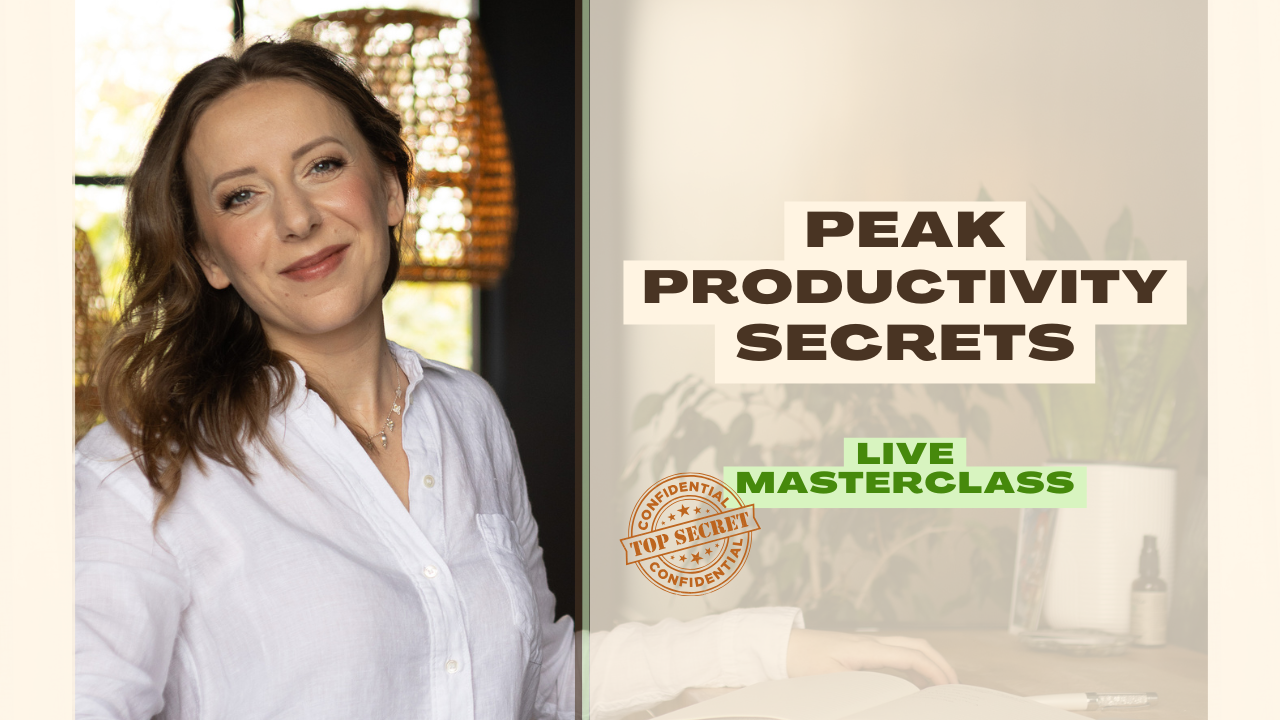
I created something just for you, my brand new free master class called Peak Productivity Secrets
is designed to help you double your results, reclaim your time and boost your energy so that you
can finally get back to doing the things that you love and I will be sharing the exact planning
framework behind all of it that I usually only share with my clients in my paid programs so to sign
up just click the link in the show notes below or head to my website viktorialevenberg.com, it is
completely free and I would love to have you in the room.
Jesse Robertson: That's true, that's true. Are they real plants in your background?
Viktoria Levenberg: Yeah, I've got a little, now the name evades me, and then this is a little, now I
forget both of their names, but this guy's freaking massive. It's like almost a tree at this point.
Jesse Robertson: I have no idea about those sort of plants. Do you have any snake plants?
Viktoria Levenberg: I have a rattlesnake, yeah.
Jesse Robertson: Is it the same as a snake?
Viktoria Levenberg: I don't know. What is a snake?
Jesse Robertson: A snake plant. What does that mean?
Viktoria Levenberg: A snake plant, like the type of plant. Apparently they're good indoor plants.
Jesse Robertson: Okay, they like detoxify the air or something.
Viktoria Levenberg: Well that's all plants.
Jesse Robertson: Ha ha ha ha ha, yeah, but no, there's something, I don't know specifically,
there's something specific about snake plants.
Viktoria Levenberg: Okay, I'll have to look into it.
Jesse Robertson: Have a look it up. I don't know how legit.
Viktoria Levenberg: Do you guys have any?
Jesse Robertson: Yeah, I have a couple of snake plants.
Viktoria Levenberg: Yeah, my mum said you should be able to describe them.
Ha ha ha ha.
Jesse Robertson: They literally look like, the leaves look like snakes.
Viktoria Levenberg: I'm just gonna Google it now because otherwise it's gonna be in the back of
my mind. And that's not good. Oh, those ones. Yeah, right. I never knew that. I just saw them as
like one of those typical house plants that are really hard to kill.
Jesse Robertson: Yeah, they are impossible. Like mine are growing like weeds right now. They are
amazing, huge.
Viktoria Levenberg: Oh, I love that.
Jesse Robertson: But then when you have a big house, it's actually so impractical for living if it's
too much space for living. And I just thought of that because like it's so easy to quickly rip off to
my sink because we have like, it's not a massive space, but it's not a, it's like an adequate space to
do those things. Just quickly run to the kitchen, where some people have to like walk half a
kilometre down to the other end of their house to—
Viktoria Levenberg: Mm hmm, mm hmm, exactly.
Yeah, and you also accumulate so much stuff when you have—so Cam and I used to have a three-
bedroom before we downsized to this place, and we had to get rid of like three carloads of stuff.
And it's like, I don't even know where it all came from. It's just because it, you know, the universe
loves a vacuum. There's that just sweet spot of having enough space so everything's functional,
you've got everything you need, not too little, not too much. And it's also more to clean as well.
Jesse Robertson: That's also true, mm hmm.
As I'm realising with children as well.
You definitely don't want to have too much space inside, because then they'll never go outside.
Viktoria Levenberg: Mm hmm, yeah, true.
Jesse Robertson: But you want to actually, you kind of want them to get a bit cabin fever to be
like, let's get outside and go do something.
Viktoria Levenberg: Mm hmm, yeah, especially like the younger generations that just have the
world in their hand, right?
Jesse Robertson: Yeah, yeah, okay, that's kind of us as well, but—
Viktoria Levenberg: Well yes and no, like we still remember a time before phones.
Jesse Robertson: That is true.
Viktoria Levenberg: You know. And like I don't know, this is like me being a little judgy Judy, and
we'll get into things in just a moment, but I was, I took Piper for a walk just before this, and there
was this lady taking a walk around Vic Park, and I was like, oh, good on her. And you know, I was
like, oh, she's probably listening to a podcast or something. And then like I saw her screen, and
she's literally scrolling TikTok as she's walking around Vic Park. I'm like, what are you doing? Why?
There's no need for you to be doing this right now. I don't understand. Hahaha.
Jesse Robertson: And I see that all the time around here.
That's—
Viktoria Levenberg: Yeah, sad.
Jesse Robertson: That's normal, normal behaviour.
It is sad, but I think that's…
I guess it's what some people feel like they need to do to like escape their mmm hmm
themselves or their situation.
Viktoria Levenberg: Yeah and and it can be a bit rough in there you know so like I no judgment I I
yeah better that than something else so…
Jesse Robertson: No judgment, Allen if you're listening to this hahaha
Viktoria Levenberg: Yeah, he's probably like sitting here with popcorn like I don't even need to
edit this part yet when are they gonna get to it hahaha.
Jesse Robertson: I didn't realize I have been a bit stuffy in the last couple days cause I thought I
was being sick but yeah I didn't even notice that only my left was more resistant and my right was
like perfectly clear.
Viktoria Levenberg: Interesting hey?
Jesse Robertson: Yeah, what does that mean?
Viktoria Levenberg: Well it's you know if we were to look at it from that model of the world it's
it's likely that you've had a lot going on and you've been pushing quite hard and you're likely in
need of some rest and downtime is that is any of that resonating?
Jesse Robertson: I mean I'm I don't know when it comes to that cause I'm just like a I'm so hard
nose when it comes to pushing through so I've never really want to know for sure but I'm trying
to become more intuitive with those sorts of cues because I know I'm so bad at it from my logic
side of the brain so I'm trying to start building that awareness to those these types of signals too
to not get so far down the track of just yeah hammering the uh huh hammering the um the body
past the the point.
Viktoria Levenberg: And that makes a lot of sense in that case if you're like very often in your left
brain which right your left brain is your right side of the body then it makes complete sense that
it's the left nostril that's blocked which is the right brain that's like stuck it's just not not quite as
flowing and fluid as um as usual so it it can even extend to like when you do stretches and one
side feels tighter than the other like I personally always only have stuff going on on the left side of
my body cause similarly to you I'm a go getter achiever let's go go go and so it's like no stop let
me relax ha ha ha ha ha ha um yeah so the body speaks to us in mysterious ways um thanks for
trying that with me you're the first podcast guest that I've taken through an advanced breath
practice who hasn't done it before so let's go no box breathing here hahaha.
Jesse Robertson: I was playing bad chess yesterday so you're right like I lost so many games that's
actually something else that I've started to use as like an indicator to where my body is at is if I'm
playing good chess or not. Yeah. Like but so when I play chess, I kind of learnt this from Elon
Musk does this he plays computer games to see how dialed in his mind is and if he loses it's his
body saying OK you're not as dialed in try not to do something that requires like 100% of your
brain power today and I was getting destroyed yesterday that would make it would show that
from like that perspective as well that my mind is overworked and it's not at optimal decision
making capability.
Viktoria Levenberg: Hundred percent and this is what it comes back to it's where like the model
you know the the productivity model of the world that we have is just this like we'll work harder
do more but the chances are like if your brain isn't fully dialed in you don't have the capacity to
tap into the creative thinking and problem solving and critical thinking that you might be if you
had taken an hour out rather than just trying to yeah yeah what a great realization um
Jesse Robertson: It is great, yeah.
Viktoria Levenberg: how are you feeling.
Jesse Robertson: Hey good yeah I can't believe that was an hour
Viktoria Levenberg: I know we went a couple minutes over so I do apologize about that um but it
was just flowing so nicely.
Jesse Robertson: We're in the zones.
Viktoria Levenberg: We're in the zones. Oh my God we could do like a secret podcast release at
some point and just like you know like deep meaningful conversations with Jesse and Vik.
Jesse Robertson: It's actually funny I caught up with a guy last week. I ended up having coffee
with him about he was doing some consulting and they had, he had this opportunity like this
mass crazily massive opportunity that was like way out of way out of my ballpark. But he wanted
to catch up with me in person just cause of what I've been writing on LinkedIn. Mm hmm. And
we were just we were talking we figured out like it wasn't really gonna work and after about 20
minutes he's like “And we're talking about some really deep stuff here Jessie.” Hahaha I was like
“Oh are we? This is like normal chat.” Hahaha I don't know this is deep or not this is normal
convo.
Viktoria Levenberg: I know right hahaha exactly it's just how I roll like that's just where you go
and I think that's probably why like our friendship is that strong as well because we both gravitate
there and we thrive in that space where as a lot of people are like whoa you don't just want to
talk about the weather like no go away ha ha ha ha.
Jesse Robertson: I just feel like with AI and how that plays out the next few years if people can't
actually have a real f**king conversation about themselves like what is there even what's the
what's there to talk about I can just talk to a robot if I wanted to talk to about the weather yeah
like a robot is probably more informative than uh huh than a person about the weather
Viktoria Levenberg: Yeah, that's why I only come to like work drinks for an hour because it's just a
you you run out of small talk and then b people start to get drunk and you're like you're
diminishing returns on my time which is one of my most important assets so I'm out of here I
would rather sleep.
Jesse Robertson: Yeah actually.
Viktoria Levenberg: The views and opinions expressed by guest on Resonance are their own and
do not necessarily reflect the views of me, Viktoria Levenberg, LVNHealth or anyone working
within the LVNHealth brand. This space welcomes a diversity of ideas, experiences and stories
and part of Resonance is learning to take what aligns and gently leaving the rest.
Also, while I am a National Board Certified Health and wellness coach and deeply passionate
about well-being, this podcast is intended for educational and inspirational purposes only.
Resonance does not substitute personalised medical, psychological or therapeutic advice. Always
seek guidance from qualified professionals for any physical, emotional or mental health concerns.